Feast of Dedication is The Festival of Lights.


Part-1. Can it be? Our Savior, is the Light of the World?

By the way, the 25th Day of the 9th month came in, after sunset on December 16th, 2025. This is an 8 day Festival that will concludes on December 24th, 2025. The picture below, is of the arrival of the 10th New Moon | Month. It came in on December 21st, after sunset. It is also called “A Day of Remembrance”
“As long as I am in the world, I am the light of the world.” Yochanon (John) 9:5 | את Cepher Publishing Group.
Since we are currently celebrating the Feast of Dedication, commonly called the Feast of Lights, or Chanukah, how many “candles”, actually lamp-stands, should there be in the “Menorah”?
The answer is:

“And you shall make a menorah of pure gold: of beaten work shall the menorah be made: his shaft, and his branches, his bowls, his knops, and his flowers, shall be of the same. And six branches shall come out of the sides of it; three branches of the menorah out of the one side, and three branches of the menorah out of the other side: Three bowls made like unto almonds, with a knop and a flower in one branch; and three bowls made like almonds in the other branch, with a knop and a flower: so in the six branches that come out of the menorah. And in the menorah shall be four bowls made like unto almonds, with their knops and their flowers. And there shall be a knop under two branches of the same, and a knop under two branches of the same, and a knop under two branches of the same, according to the six branches that proceed out of the menorah. Their knops and their branches shall be of the same: all it shall be one beaten work of pure gold. And you shall make the seven lamps thereof: and they shall light the lamps thereof, that they may give light over against it. And the tongs thereof, and the snuff dishes thereof, shall be of pure gold. Of a talent of pure gold shall he make it, את with all these vessels. And look that you make them after their pattern, which was showed you in the Mount.” Shemoth (Exodus) 25:31-40 | את Cepher Publishing Group.
Below are variations of the menorah that have 7 candles, but no knops. Also, there is no mention of the Star of David in it!

It must have 7 lamps, not 8, or 9! “Seven lamps…make them after their pattern, which was showed you in the Mount.”

According to Chabad.org:
“It Used Olive Oil
Each of the menorah’s seven lamps was filled with pure olive oil and a wick which was kindled on a daily basis. Interestingly, the preparation of the lamps appears to have been even more important than the lighting itself. Thus, we find that any Jew was qualified to light the menorah,12 but only Aaron and his descendants were allowed to perform the preparation. Each lamp was filled with a half log of oil, which was enough to burn through the longest winter night.
Watch: Pure Olive Oil
7. The Western Lamp Was Special
There was one light referred to as the “western lamp,” which was to burn “constantly,”13 through the day as well as the night. Which lamp was the western lamp? There is a longstanding disagreement among the sages whether the menorah was set with its branches extending from east to west, or from north to south. According to the opinion that the menorah was placed north-south, the central lamp was considered “western,” since the wick of that lamp was tilted toward the west.”14 According to the opinion that the menorah was arranged from east to west, it may either refer to the lamp that was actually closest to the west,15 or the second to the east—the first one that could be referred to as “western,” since it was to the west of the easternmost lamp.16
8. Solomon Added 10 Menorahs
For hundreds of years, the menorah was housed in the temporary Tabernacle or in its semi-permanent iterations. When Solomon built the Holy Temple in Jerusalem, he had 10 additional menorahs made and placed in the sanctuary, five to the right of the existing menorah and five to its left.17
Read: Solomon’s Temple”
According to Google AI: “On the seven-lamp menorah described in the Book of Exodus (Exodus 25:31-36), the knop (or bulb) and flower (or blossom/petal) are purely ornamental elements. They were crafted as stylized depictions of an almond tree's buds and blossoms.
Description and Placement
The entire menorah, including its shaft and branches, was a single, hammered piece of pure gold adorned with these decorative features.
Knop: The knop (Hebrew kaphtor), also translated as "bulb" or "bud," was a rounded, architectural ornament, similar to a small gourd or an egg.
Flower: The "flower" (Hebrew perah), also translated as "blossom" or "petal," was an open, flower-shaped design, often thought to be a stylized lily or the open almond blossom itself.
These elements were arranged in a specific, repeating pattern along the branches and the central shaft:
On each of the six side branches: There were three cups, shaped like almond blossoms, and each of these cups included a knop and a flower as part of its design.
On the central shaft: There were four similar cups, each with its accompanying knop and flower.
Connecting the branches: A knop was strategically placed on the main shaft under each place where a pair of branches extended from it.
Symbolism
The almond motif was highly significant in the biblical context:
Vigilance and divine watchfulness: The almond tree is notably the first tree to blossom in spring in Israel, symbolizing God's alertness and readiness to fulfill His word and promises (as referenced in Jeremiah 1:11-12).
Life and growth: The progression from bud (knop) to open blossom (flower) represented life, spiritual growth, and fruitfulness.
A divine pattern: The intricate and precise description in Exodus emphasizes that the design was given by God and was to be followed exactly, serving as a physical model of heavenly things.”

Now we turn our attention back to our Savior:
*Can we truly rely upon Ya’ohshai, our Redeemer’s teachings? Among other scriptures, we will examine John Chapter 7 in detail to see if this is possible.
“Yahusha answered: Are there not twelve hours in the day? If any man walks in the day, he stumbles not, because he sees the light of this world.” Yochanon (John) 11:9 | את Cepher Publishing Group.
Was he born into and bound by the Covenant arrangement of the “Torah”? Let’s take a look at his lineage:
“And Ya'aqov begat Yoceph the father of Miryam, of whom was born Yahusha, who is called Mashiach. So all the generations from Avraham to David are fourteen generations; and from David until the carrying away into Babel are fourteen generations; and from the carrying away into Babel unto Mashiach are fourteen generations. Now the birth of Yahusha Ha'Mashiach was on this wise: When as his mother Miryam was espoused to Yoceph, before they came together, she was found with child of the Holy Spirit | Ruach Ha'Qodesh. Then Yoceph her man, being a just man, and not willing to make her a public example, was minded to put her away privily. But while he thought on these things, behold, the angel of Yah appeared unto him in a dream, saying: Yoceph, son of David, fear not to take unto you את Miryam your woman: for that which is conceived in her is of the Ruach Ha'Qodesh. Mattithyahu (Matthew) 1:16-20 | את Cepher Publishing Group.

Since he was born a descendant of King “David” of the tribe of Ya’ohdah | “Judah”, the Lion Tribe, was he under the Abrahamic Covenant, and obligated to live by the Thorah | Laws of Abba YAH?
“And in the sixth month the angel Gavriy'el was sent from Elohiym unto a city of Galiyl, named Natsareth, To a virgin espoused to a man whose name was Yoceph, of the house of David; and the virgin's name was Miryam. And the angel came near unto her, and said: Hail, you that are highly favored, Yahuah is with you: blessed are you את among women. And when she saw him, she was troubled at his saying: and cast in her mind what manner of salutation this should be. And the angel said unto her, Fear not, Miryam: for you have found favor with Elohiym. And, behold, you shall conceive in your womb, and bring forth a son, and shall call his name Ya’ohshai | Yahusha. He shall be great and shall be called the Son of El Elyon: and Yahuah Elohiym shall give unto him the throne of his father David: And he shall reign over the house of Ya'aqov forever; and of his Kingdom there shall be no end.” Luqas (Luke) 1:26-33 | את Cepher Publishing Group.
How about the Laws of YA’OH? Was he bound them?
Circumcision is one of the earliest signs of our covenant relationship with ABBA YAH:
“And Abraham | Avraham circumcised his son Yitschaq being eight days old, as Elohiym had commanded him. Bere'shiyth (Genesis) 21:4 | את Cepher Publishing Group.
Many mistakenly believe their savior was born during the Winter Solstice, the beginning of Winter. If you carefully read the following passage, you can see that the Shepherds were the only eyewitnesses of this event. They were likewise tending their flocks:
Likewise, Ya’ohshai was also circumcised on the 8th day after his birth:
“But Miryam kept all these things and pondered them in her heart. And the shepherds returned, glorifying and praising Elohiym for all the things that they had heard and seen, as it was told unto them. And when eight days were accomplished for the circumcising of the child, his name was called Ya’ohshai | Yahusha, which was so named of the angel before he was conceived in the womb. And when the days of her purification according to the Torah of Mosheh were accomplished, they brought him to Yerushalayim, to present him to Yahuah; (As it is written in the statutes of Yahuah, Every male that opens the womb shall be called holy to Yahuah;)” Luqas (Luke) 2:19-23 | את Cepher

How about the custom of the decking of the tree? Did you know that the Bible does address this specifically?

“Hear ye the Word which Yahuah speaks unto you, O house of Yashar'el: Thus says Yahuah: Learn not the way of the heathen and be not dismayed at the signs of heaven; for the heathen are dismayed at them. For the customs of the people are vain: for one cuts a tree out of the forest, the work of the hands of the workman, with the axe. They deck it with silver and with gold; they fasten it with nails and with hammers, that it moves not. They are upright as the palm tree, but speak not: they must needs be borne, because they cannot go. Be not afraid of them; for they cannot do evil, neither also is it in them to do good. Forasmuch as there is none like unto you, O Yahuah; you are great, and your name is great in might. Who would not fear you, O King of nations? For to you does it appertain; forasmuch as among all the wise men of the nations, and in all their kingdoms, there is none like unto you. But they are altogether brutish and foolish: the tree is a doctrine of vanities. Silver spread into plates is brought from Tarshiysh, and gold from Uphaz, the work of the workman, and of the hands of the founder: blue and purple is their clothing: they are all the work of cunning men. But YA’OH | Yahuah is the ALA’AYM | Elohiym of Truth, he is the living ALA’AYM | Elohiym, and the Everlasting King: at his wrath the earth shall tremble, and the nations shall not be able to abide his indignation.” Yirmeyahu (Jeremiah) 10:1-10 | את Cepher Publishing Group.
“Thus shall ye say unto them: The deities | elohiym that have not made the heavens and the earth, even they shall perish from the earth, and from under these heavens. He has made the earth by his power, he has established the world by his wisdom, and has stretched out the heavens by his discretion. When he utters his voice, there is a multitude of waters in the heavens, and he causes the vapors to ascend from the ends of the earth; he makes lightnings with rain and brings forth the wind out of his treasures. Every man is brutish in his knowledge: every founder is confounded by graven image: for his molten image is falsehood, and there is no breath in them. They are vanity, and the work of errors: in the time of their visitation they shall perish. The portion of Ya'aqov is not like them: for he is the former of all things; and Ya’ohsharal | Yashar'el is the rod of his inheritance: YA’OH of Hosts | Yahuah Tseva'oth is his name. Gather up your wares out of the land, O inhabitant of the fortress. For thus says YA’OH | YHWH | Yahuah: Behold, I will sling out the inhabitants of the land at this once, and will distress them, that they may find it so. Woe is me for my hurt! my wound is grievous: but I said: Truly this is a grief, and I must bear it. My tabernacle is spoiled, and all my cords are broken: my children are gone forth of me, and they are not: there is none to stretch forth my tent anymore, and to set up my curtains. For the pastors are become brutish and have not sought YA’OH | YHWH | Yahuah: therefore they shall not prosper, and all their flocks shall be scattered. Behold, the noise of the bruit is come, and a great commotion out of the north country, to make the cities of Ya’ohdah | Yahudah desolate, and a den of dragons. O YA’OH | YHWH | Yahuah, I know that the way of man is not in himself: it is not in man that walks to direct his steps. O YA’OH | YHWH | Yahuah, correct me, but with judgment; not in your anger, lest you bring me to nothing. Pour out your fury upon the heathen that know you not, and upon the families that call not on your name: for they have eaten up Ya'aqov, and devoured him, and consumed him, and have made his habitation desolate.” Yirmeyahu (Jeremiah) 10:11-25 | את Cepher Publishing Group.
“After these things Ya’ohshai | Yahusha walked in Galiyl: for he would not walk in the land of Yahud, because the Yahudiym sought to kill him. Now YA’OH’s | YHWH | Yahuah's Feast of Cukkoth, which the Yahudiym observed, was at hand. And his brethren therefore said unto him: Depart hence, and go into the land of Yahud, that your Disciples or students | Talmidiym also may see the works that you do. For there is no man that does anything in secret, and he himself seeks to be known openly. If you do these things, show yourself to the world. For neither did his brethren believe in him.” Yochanon (John) 7:1-5 | את Cepher
“Then Yahusha said unto them: My time is not yet come: but your time is always ready. The world cannot hate you; but me it hates, because I testify of it, that the works thereof are evil. Go ye up unto this feast: I go not up yet unto this feast; for my time is not yet full come. When he had said these words unto them, he abode still in Galiyl. But when his brethren were gone up, then went he also up unto the feast, not openly, but as it were in secret. Yochanon (John) 7:6-10 | את Cepher
“Then the Yahudiym sought him at the feast, and said: Where is he? And there was much murmuring among the people concerning him: for some said: He is a good man: others said, Nay; but he deceives the people. Howbeit no man spoke openly of him for fear of the Yahudiym. Now about the midst of the feast Yahusha went up into the Temple and taught. And the Yahudiym marveled, saying: How knows this man the Scriptures, having never learned? Yochanon (John) 7:11-15 | את Cepher
“Ya’ohshai | Yahusha answered them, and said: My doctrine is not mine, but his that sent me. If any man will do his will, he shall know of the doctrine, whether it be of Elohiym, or whether I speak of myself. He that speaks of himself seeks his own glory: but he that seeks his glory that sent him, the same is true, and no unrighteousness is in him. Did not Mosheh give you the Law, and yet none of you keeps the Law? Why go ye about to kill me? The people answered and said: You have a devil: who goes about to kill you? Yochanon (John) 7:16-20 | את Cepher
“Yahusha answered and said unto them: I have done one work, and ye all marvel. Mosheh therefore gave unto you circumcision; (not because it is of Mosheh, but of the fathers;) and ye on the Shabbath circumcise a man. If a man on the Shabbath receive circumcision, that the Law of Mosheh should not be broken; are ye angry at me, because I have made a man every whit whole on the Shabbath? Judge not according to the appearance but judge righteous judgment. Then said some of them of Yerushalayim: Is this not he whom they seek to kill? Yochanon (John) 7:21-25 | את Cepher
“But, lo, he speaks boldly, and they say nothing unto him. Do the rulers know indeed that this is the very Mashiach? Howbeit we know this man whence he is: but when Mashiach comes, no man knows whence he is. Then cried Yahusha in the Temple as he taught, saying: Ye both know me, and ye know whence I am: and I am not come of myself, but he that sent me is true, whom ye know not. But I know him: for I am from him, and he has sent me. Then they sought to take him: but no man laid hands on him, because his hour was not yet come. Yochanon (John) 7:26-30 | את Cepher
“And many of the people believed on him, and said: When Mashiach comes, will he do more miracles than these which this man has done? The Parashiym heard that the people murmured such things concerning him; and the Parashiym and the chief priests sent officers to take him. Then said Yahusha unto them: Yet a little while am I with you, and then I go unto him that sent me. Ye shall seek me and shall not find me: and where I am, thither ye cannot come. Then said the Yahudiym among themselves: Whither will he go, that we shall not find him? Will he go unto the dispersed among the other nations, and teach the other nations? Yochanon (John) 7:31-35 | את Cepher

“What manner of saying is this that he said: Ye shall seek me, and shall not find me: and where I am, thither ye cannot come? In the last day, that great day of the feast, Yahusha stood and cried, saying: If any man thirst, let him come unto me, and drink. He that believes on me, as the Scripture has said, out of his belly shall flow rivers of living water. (But this spoke he of the Ruach, which they that believe on him should receive: for the Ruach Ha'Qodesh was not yet given; because that Yahusha was not yet glorified.) Many of the people therefore, when they heard this saying: said: Of a truth this is the Prophet. Yochanon (John) 7:36-40 | את Cepher
“Others said: This is Ha'Mashiach. But some said: Shall Mashiach come out of Galiyl? Has not the Scripture said: That Mashiach comes of the seed of David, and out of the town of Beyt Lechem, where David was? So there was a division among the people because of him. And some of them would have taken him; but no man laid hands on him. Then came the officers to the chief priests and Parashiym; and they said unto them: Why have ye not brought him? Yochanon (John) 7:41-45 | את Cepher
“The officers answered: Never man spoke like this man. Then answered them the Parashiym: Are ye also deceived? Have any of the rulers or of the Parashiym believed on him? But this people who knows not the Law are cursed. Niqodiymon said unto them: (he that came to Yahusha by night, being one of them,) Yochanon (John) 7:46-50 | את Cepher
“Does our Law judge any man, before it hears him, and know what he does? They answered and said unto him: Are you also of Galiyl? Search, and look: for out of Galiyl arises no prophet. And every man went unto his own house. Yochanon (John) 7:51-53 | את Cepher
***Even the Apostle “Paul” had to adhere to these very same Commandments of Abba YAH, with regards to the issue of, and significance of “Circumcision”, a requirement of the Torah | Laws of YA’OH ALA’AYM!
“Then came he to Derbe and Lystra: and behold, a certain Talmiyd was there, named Timotheus, the son of a certain woman, which was a Yahudiy, and believed; but his father was a Greek | Yavaniy: Which was well reported of by the brethren that were at Lystra and Iconium. Him would Pa'al have to go forth with him; and took and circumcised him because of the Yahudiym which were in those quarters: for they knew all that his father was a Yavaniy. And as they went through the cities, they delivered them the decrees to keep, that were ordained of the apostles and elders which were at Yerushalayim. And so were the called-out assemblies established in the faith and increased in number daily.”***Ma'asiym (Acts) 16:1-5 | את Cepher Publishing Group.
What about the “Temple”?

According to: https://www.womeninthescriptures.com/
WHAT WAS THE TEMPLE LIKE IN JESUS’S TIME?
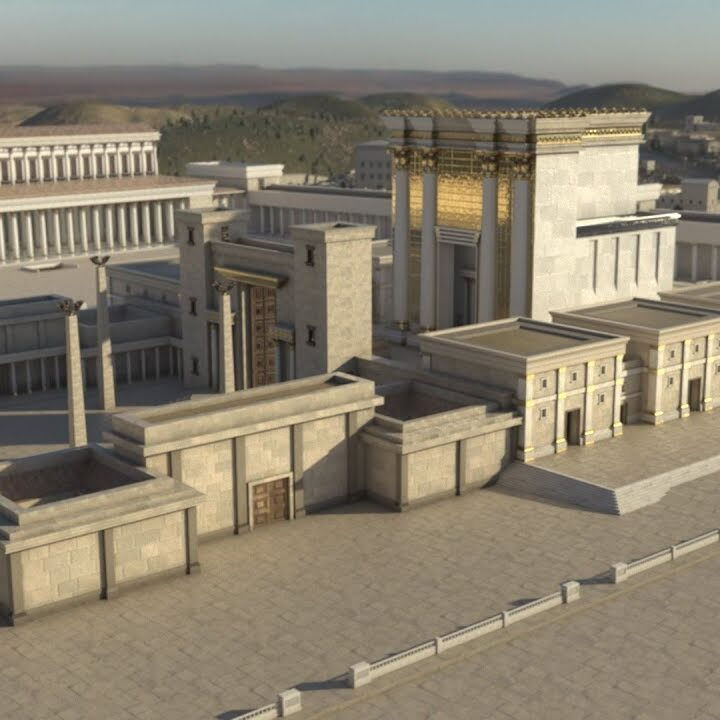
3D Model of the Temple in Jesus’s Time
The Temple in Jerusalem plays an important role in the New Testament. It was the center of the Jewish faith and consequently, was the center of many of Jesus’s teachings. Not only were many of Jesus’s teachings given at the temple, but his sermons were full of temple references, imagery and symbolism.
1) It was called the “Second Temple” and “Herod’s Temple
It was the “second temple” because the first temple, which had been built by Solomon, was completely destroyed by the Babylonians in 586 BC when they overthrew the kingdom of Judah and took the remaining Jews captive (this story is told in the books of 2 Kings, Jeremiah, and Lamentations in the Old Testament). After almost 60 years in captivity the Emperor Cyrus allowed the Jews to return to Jerusalem and rebuild the temple (this story is told in the books 2nd Chronicles, Ezra and Nehemiah in the Old Testament). The Jews, led by a man named Zerubbabel, rebuilt Jerusalem’s wall and began laying the foundations for the rebuilding the temple. For this reason the second temple was also sometimes called “Zerubbabel’s Temple” because he was the one who began it’s construction. This second temple was rededicated by the Jews in 515 BC.
Herod the great, was the Roman king of Judea from 37 BC–AD 4 . He was called “the great” not because he was a great king but because of the monumental and “great” building projects he commissioned in Judea during his rule. He developed a water supply system for Jerusalem and built impressive fortresses and palaces in Masada and Herodium. Yet his most ambitious project was the rebuilding and massive expansion of the Jewish temple in Jerusalem.

By Herod’s time the second temple was nearly 500 years old and was not in great shape, having been ransacked by many different invaders over the centuries. The Jewish historian Josephus wrote that Herod wanted to immortalize his name through his building projects and that these projects were paid for by extracting heavy taxes. This made Herod an unpopular ruler, and it is probable that his focus on rebuilding and expanding the Jewish temple was an attempt to appease and mollify the Jews populace. Herod poured enormous amounts of money into the building of the temple. He hired architects from Greece, Rome and Egypt to design it, but the actual construction was done by the Jewish priests as part of their priestly duties.
Before Herod began his building project the temple was relatively small, consisting of only the sanctuary building and the outer court on top of Mount Moriah. Herod expanded the temple to fill the entire mountain, turning it into a giant rectangular platform the length of ten football fields, with enormous retaining walls on all sides. It was no longer just the temple, but an entire Temple complex known as the “temple mount”.
This temple mount included the actual temple with its holy of hollies in the center, outer courtyards, numerous gates with sweeping staircases, huge walls and even a Roman Fortress called the Antonia Fortress. It was one of the most magnificent buildings of its day and quickly became the came the center of Jewish identity and worship. No one knows exactly how long it took to build, but it likely that parts of it were still under construction during Jesus time.
2) It was Missing Some Important Parts
When the Jews built the second temple they tried their best to rebuild it after the same manner that the first temple, Solomon’s Temple, was built. Yet, there were a few things that were destroyed or lost during the destruction of the first temple which could not be replaced. The Latter-Day Saint Bible Dictionary explains,
The Jews reckoned the temple of Zerubbabel [the second temple] to be in five points inferior to the temple of Solomon: in the absence of (1) the Ark of the Covenant (lost or burned at the destruction of Jerusalem and never renewed); (2) the Shechinah or manifestation of the glory of the Lord; (3) the Urim and the Thummim (Ezra 2:63); (4) the holy fire upon the altar; (5) the spirit of prophecy.

The Ark of the Covenant, with the Mercy Seat, was the center of the Jewish temple.
THE HOLY OF HOLIES
The Holy of Holies
The Holy of Holies, (Kodesh haKedoshim), is the most sanctified place in the Mikdash. It housed the Ark of the Covenant
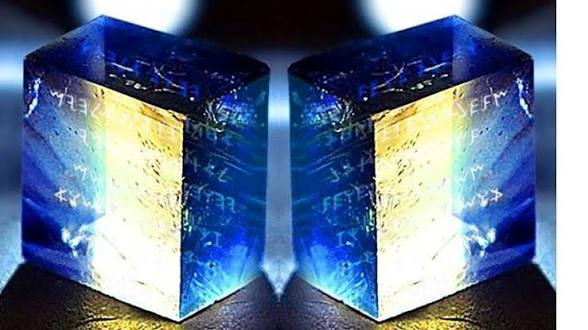
and the Two Tablets of the law. Only the Kohen Gadol (High Priest) was permitted to enter here, and only on Yom Kippur. In the center of the Holy of Holies stood the foundation stone upon which the Ark rested. Next to the Ark the jar of anointing oil was placed,

as well as the container of Manna and Aharon's staff that had blossomed.
Aharon's staff that had blossomed.

The Holy of Holies was also called "Dvir" - because it was from the area between the two Cherubim that Moshe heard G-d's word.
The inner measurement of the Holy of Holies was twenty cubits squared. The Ark rested in the center of the Holy of Holies, and on both sides of the Ark were poles used for carrying. These poles were ten cubits long, and yet they protruded outwards towards the curtain.”

“It was literally in the center, within the Holy of Hollies and was believed to be the literal dwelling place of God. When the Ark was within the temple the Shechinah, a word which means “dwelling place”, was present in the temple. God was there. Without the Ark, the Shechinah, the dwelling place of God, and the manifestations of His power was lost. The temple in Jesus’s day was physically a magnificent building but was spiritually empty.
What did the Temple look like during the time of the Messiah?
What Was the Holy Temple in Jerusalem?

The Structure
The “Holy Temple”—in Hebrew, Beit Hamikdash (pronounced BAYt hah-mik-DASH)—was a large (approximately football-stadium-sized), multi-level, indoor-outdoor structure that was the nucleus of Judaism, its most sacred site. It stood atop Jerusalem’s Mount Moriah.”

Since most of the people of the world are celebrating the day of his birth,

did he do so, or did he observe a different event during that time period, let’s call it the Festival of Dedication or the Feast of Lights:
For answers, we need to take an in-depth view of what the Scriptures actually state:

“Then spoke Yahusha again unto them, saying: I am the light of the world: he that follows me shall not walk in darkness, but shall have the light of life. Yochanon (John) 8:12 | את Cepher
“The Parashiym therefore said unto him: You bear record of yourself; your record is not true. Yahusha answered and said unto them: Though I bear record of myself, yet my record is true: for I know whence I came, and whither I go; but ye cannot tell whence I come, and whither I go. Ye judge after the flesh; I judge no man. And yet if I judge, my judgment is true: for I am not alone, but I and the Father that sent me.” Yochanon (John) 8:13-16 | את Cepher

“And it was at Yaroshalam | Jerusalem | Yerushalayim the Feast of Chanukkah, and it was winter. And Ya’ohshai | (falsely known as Jesus) Yahusha walked in the Temple in Shalomah's Porch.” Yochanon (John) 10:22-23 | את Cepher
“Then came the Yahudiym round about him, and said unto him: How long do you make us to doubt? If you be Ha'Mashiach, tell us plainly. Ya’ohshai Yahusha answered them, I told you, and ye believed not: the works that I do in my Father's name, they bear witness of me. But ye believe not, because ye are not of my sheep, as I said unto you. My sheep hear my voice, and I know them, and they follow me: And I give unto them eternal life; and they shall never perish, neither shall any man pluck them out of my hand. Yochanon (John) 10:24-28 | את Cepher
“My Father, which gave them to me, is greater than all; and no man is able to pluck them out of my Father's hand. I and my Father are yachad.” Yochanon (John) 10:29-30 | את Cepher Publishing Group. According to their Lexicon:
“{unity = yachad (yaw-chawd')
One with YA’OH | Yahuah and one with the brothers | brethren. Unity of the SPIRIT | RUACH.}”

“The Feast of Lights, or Feast of Dedication, is the Jewish holiday of Hanukkah, commemorating the rededication of the Holy Temple in Jerusalem after the Maccabean Revolt (around 165 BCE). It's an eight-day festival celebrated in winter, symbolizing God's deliverance, the miracle of the menorah oil burning for eight days, and rededicating hearts to God, with rituals like lighting a nine-branched candelabrum (hanukkiah).
Key Aspects:
Name: Hanukkah (Hebrew for "dedication"), Festival of Lights, Feast of Dedication.
Origin: The Maccabean revolt against Syrian-Greek rule, reclaiming and purifying the defiled Temple.
Significance: A celebration of religious freedom, God's light in darkness, and His miracles.
Ritual: Lighting one candle on the hanukkiaheach night, starting with the shamash (helper candle).
Biblical Mention: Jesus observed this feast in Jerusalem, as noted in John 10:22-23, highlighting its importance.
In essence, it's a joyous festival of light and remembrance, celebrating the restoration of faith and the Temple.”

(Representation or simulation of our Savior Ya'ohshai as the "Temple" as stated in John 2:19-21: "Then answered the Yahudiym and said unto him: What sign show you unto us, seeing that you do these things? Ya’ohshai | Yahusha answered and said unto them: Destroy this temple, and in three days I will raise it up. Then said the Yahudiym, Forty and six years was this Temple in building, and will you rear it up in three days? But he spoke of the temple of his body. When therefore he was risen from the dead, his Talmidiym remembered that he had said this unto them; and they believed the Scripture, and the word which Yahusha had said).” Yochanon (John) 2:18-22 | את Cepher

“It is also written in the statutes, describing that the testimony of two men is true. I am one that bears witness of myself, and the Father that sent me bears witness of me. Then said they unto him: Where is your Father? Yahusha answered: Ye neither know me, nor my Father: if ye had known me, ye should have known my Father also. These words spoke Yahusha in the treasury, as he taught in the Temple: and no man laid hands on him; for his hour was not yet come. Then said Yahusha again unto them, I go my way, and ye shall seek me, and shall die in your sins: whither I go, ye cannot come.” Yochanon (John) 8:17-21 | את Cepher
“Then said the Yahudiym: Will he kill himself? Because he says: Whither I go, ye cannot come. And he said unto them: Ye are from beneath; I am from above: ye are of this world; I am not of this world. I said therefore unto you, that ye shall die in your sins: for if ye believe not that I am he, ye shall die in your sins. Then said they unto him: Who are you? And Yahusha said unto them: Even the same that I said unto you from the beginning. I have many things to say and to judge of you: but he that sent me is true; and I speak to the world those things which I have heard of him.” Yochanon (John) 8:22-26 | את Cepher
“They understood not that he spoke to them of the Father. Then said Yahusha unto them: When ye have lifted up the Son of A'dam, then shall ye know that I am he and that I do nothing of myself; but as my Father has taught me, I speak these things. And he that sent me is with me: The Father has not left me alone; for I do always those things that please him. As he spoke these words, many believed on him. Then said Yahusha to those Yahudiym which believed on him: If ye continue in my word, then are ye my Talmidiym | Disciples or students indeed;”Yochanon (John) 8:27-31 | את Cepher
“And ye shall know את the Truth, and the Truth shall make you free. They answered him: We are Abraham’s | Avraham's seed, and were never in bondage to any man: how say you: Ye shall be made free? Yahusha answered them: Amein, Amein, I say unto you: Whosoever commits sin is the servant of sin. And the servant abides not in the house forever: but the Son abides ever. If the Son therefore shall make you free, ye shall be free indeed. Yochanon (John) 8:32-36 | את Cepher
“The etymology for the word “Hanukkah”, according to Wikipedia is:
“The name "Hanukkah" derives from the Hebrew verb "חנך", meaning "to dedicate", because on Hanukkah, the Maccabees Jews regained control of Yaroshalam | Jerusalem and rededicated the Temple.[12][13]
Many homiletical explanations have been given for the name:[14]
The name can be broken down into חנו כ״ה, "[they] rested [on the] twenty-fifth", referring to the fact that the Jews ceased fighting on the 25th day of Kislev (9th month), the day on which the holiday begins.[15]
Psalm 30 is called שיר חנכת הבית Shîr Ḥănukkāt HaBayit, "the Song of the 'Dedication' of the House", and is traditionally recited on Hanukkah. 25 (of Kislev) + 5 (Books of Torah) =
30, which is the number of the song.
Cepher Publishing Group’s Lexicon: Psalm = Mizmor (miz-more')
Properly, instrumental music; by implication, a poem set to notes.
Psalms Chapter 30:1-12:
“I will extol you, O Yahuah; for you have lifted me up, and have not made my foes to rejoice over me. O Yahuah Elohai, I cried unto you, and you have healed me. O Yahuah, you have brought up my soul from She'ol: you have kept me alive, that I should not go down to the pit. Sing unto Yahuah, O ye chaciyd | saints of his, and give thanks at the remembrance of his holiness. For his anger endures but a moment; in his favor is life: weeping may endure for a night, but joy comes in the morning. And in my prosperity, I said, I shall never be moved. YA’OH | YHWH | Yahuah, by your favor you have made my mountain to stand strong: you did hide your face, and I was troubled. I cried to you, O YA’OH | YHWH | Yahuah; and unto Yahuah I made supplication. What profit is there in my blood, when I go down to the pit? Shall the dust praise you? Shall it declare your Truth? Hear, O YA’OH | YHWH | Yahuah, and have mercy upon me: YA’OH | YHWH | Yahuah, be my helper. You have turned for me my mourning into dancing: you have put off my sackcloth and girded me with gladness; To the end that my glory may sing praise to you, and not be silent. O YA’OH my ALA’AYM | YHWH | Yahuah Elohai, I will give thanks unto you forever.” Tehilliym (Psalms) 30:1-12 | את Cepher Publishing Group.
Alternative spellings

Spelling variations due to transliteration of Hebrew Ḥet Nun Vav Kaf Hey
In Hebrew, the word Hanukkah is written חֲנֻכָּה or חֲנוּכָּה (Ḥănukā). It is most commonly transliterated to English as Hanukkah or Chanukah. The spelling Hanukkah[17] is the most common[18] and the preferred choice of Merriam–Webster,[19] Collins English Dictionary, the Oxford Style Manual, and the style guides of The New York Timesand The Guardian.[20] The sound represented by Ch ([χ], similar to the Scottish pronunciation of loch) is not native to the English language, so those not familiar with Hebrew pronunciation may pronounce it with an h ([h]).[e]Furthermore, the letter ḥeth (ח), which is the first letter in the Hebrew spelling, is pronounced differently in modern Hebrew (voiceless uvular fricative) from in classical Hebrew (voiceless pharyngeal fricative[ħ]), and neither of those sounds is unambiguously representable in English spelling. However, the classical Hebrew sound is closer to the English H than to the Scottish Ch, and Hanukkah more accurately represents the spelling in the Hebrew alphabet.[17] Moreover, the 'kaf' consonant is geminate in classical (but not modern) Hebrew. Adapting the classical Hebrew pronunciation with the geminate and pharyngeal Ḥeth can lead to the spelling Hanukkah, while adapting the modern Hebrew pronunciation with no gemination and uvular Ḥeth leads to the spelling Chanukah.[21][22][23]”

*****We have created a second part to this article. We will publish it shortly.*****


Comments